
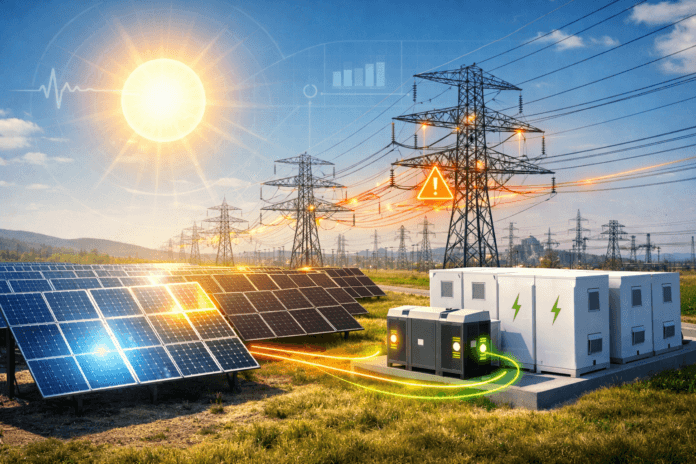
Why Is Solar Power Being Wasted?
Solar power curtailment: Solar energy is one of the fastest-growing sources of clean electricity worldwide. Yet, in many regions, solar power is deliberately reduced or “curtailed”, even when the sun is shining and panels are capable of generating more power.
This challenge is accelerating the adoption of battery energy storage systems that help capture excess solar and improve grid flexibility.
This practice—known as solar power curtailment—may sound counterintuitive in a world racing toward net-zero. So why does it happen, and more importantly, how can it be reduced?
What Is Solar Power Curtailment?
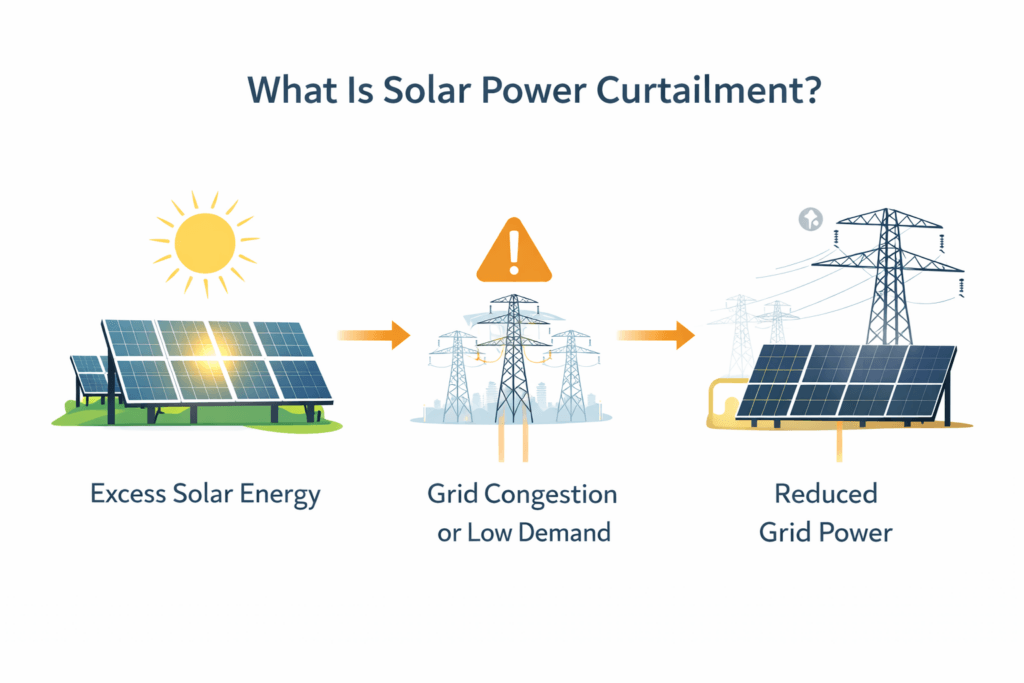
Solar power curtailment occurs when grid operators intentionally limit the output of solar power plants, preventing available energy from being fed into the electricity grid.
In simple terms:
The solar system can produce power, but it’s told not to.
Curtailment can affect:
- Utility-scale solar farms
- Commercial rooftop solar
- Distributed residential solar systems
Why Does Solar Curtailment Happen?
1. Grid Congestion
Transmission lines may lack capacity to carry excess solar power, especially in high-solar regions.
2. Supply–Demand Imbalance
Solar generation often peaks during midday—when electricity demand may be low.
3. Grid Stability Issues
Excess solar can cause:
- Frequency instability
- Voltage fluctuations
- Reverse power flow challenges
4. Lack of Energy Storage
Without batteries, surplus solar energy has nowhere to go.
This is why utilities and developers are rapidly deploying solar battery storage systems to absorb midday overgeneration and release power during peak demand.
5. Market & Policy Constraints
In some markets:
- Negative pricing discourages generation
- Grid rules favor conventional power plants
Regions Most Affected by Solar Curtailment
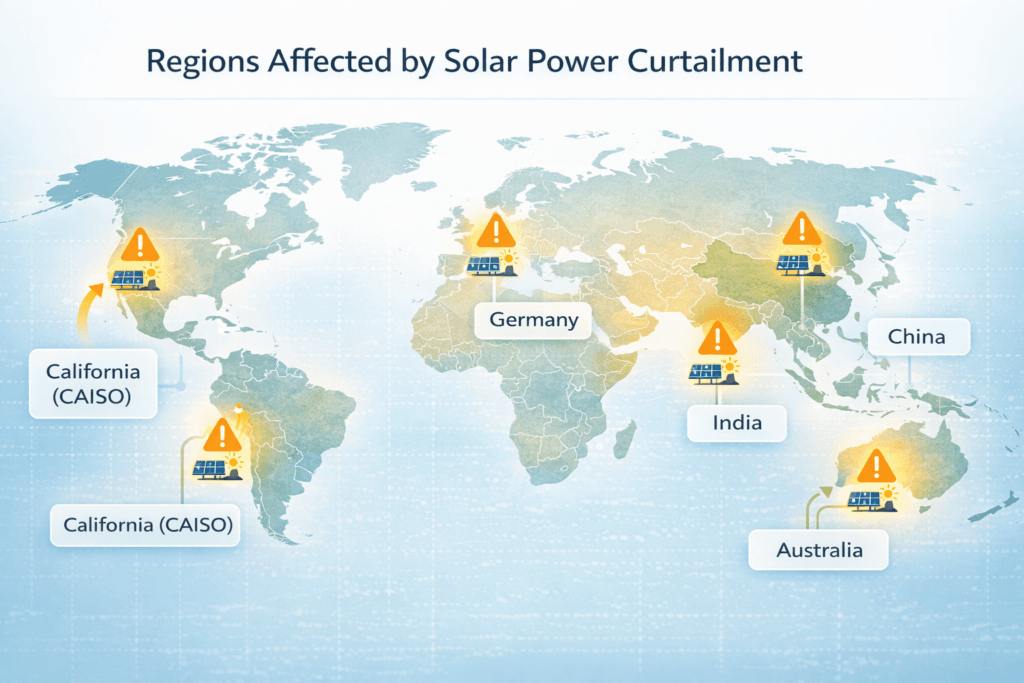
Solar curtailment is rising in:
- California (CAISO)
- China
- India
- Germany & Spain
- Australia
As solar penetration increases, curtailment becomes a grid design problem, not a technology failure.
The Real Cost of Solar Curtailment
Economic Impact
- Lost revenue for solar plant owners
- Reduced return on investment (ROI)
- Higher levelized cost of energy (LCOE)
Lost revenue and reduced ROI are major concerns for solar developers—especially those without grid-scale battery storage integrated into their projects.
Environmental Impact
- Clean energy goes unused
- Fossil plants may stay online unnecessarily
Grid Inefficiency
- Wasted renewable potential
- Increased system complexity
How to Reduce Solar Power Curtailment
1. Battery Energy Storage Systems (BESS) 🔋
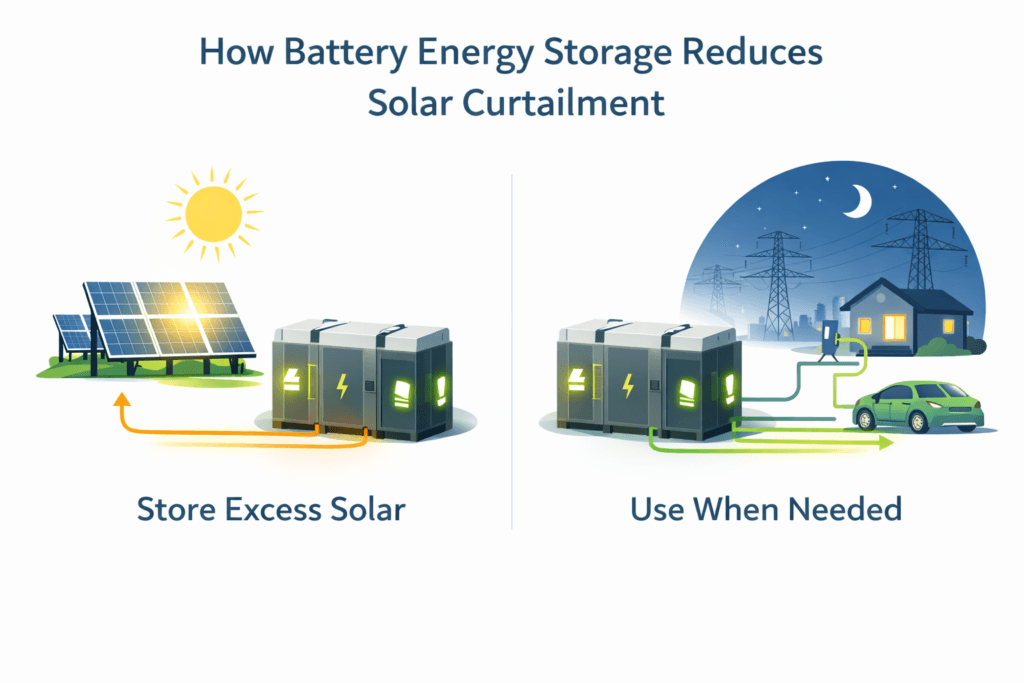
Battery Energy Storage Systems (BESS) are the most effective solution to solar curtailment.
Modern LiFePO₄ battery systems offer long cycle life, thermal stability, and daily cycling—making them ideal for solar-heavy grids.
Benefits:
- Stores excess solar for evening use
- Smooths peak generation
- Enables time-shifting and arbitrage
Solar + Storage = Minimal Curtailment
Pairing solar with home energy storage systems or commercial battery solutions enables time-shifting and peak shaving.
2. Grid Infrastructure Upgrades
- New transmission lines
- Smart inverters
- Advanced grid automation
3. Demand Response & Load Shifting
Encouraging electricity use when solar is abundant:
- EV charging at midday
- Industrial load shifting
- Smart appliances
4. Hybrid Power Plants
Hybrid projects combining solar with battery energy storage solutions are becoming the standard for utility-scale renewable projects.
- Batteries
- Wind
- Gas peakers (as backup)
5. Policy & Market Reforms
- Flexible grid codes
- Storage incentives
- Dynamic pricing models
Solar Curtailment vs Energy Clipping
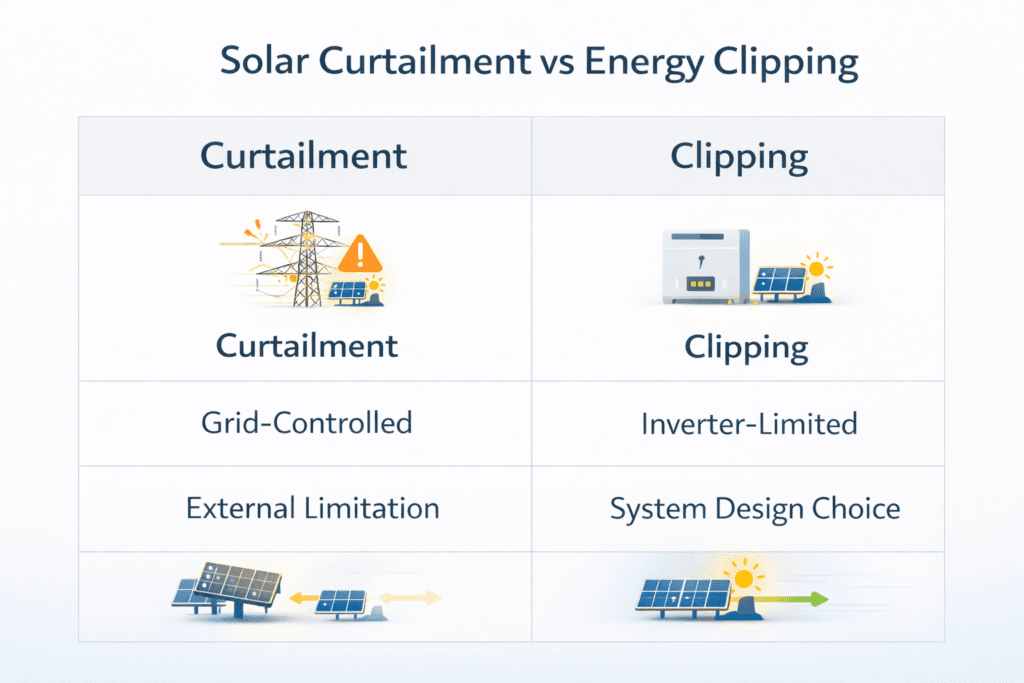
| Aspect | Curtailment | Clipping |
|---|---|---|
| Cause | Grid or system-level | Inverter sizing |
| Control | Utility / Grid operator | System designer |
| Energy Loss | External | Internal |
Both reduce output—but for very different reasons.
Is Solar Curtailment a Bad Thing?
Not always.
Limited curtailment can:
- Protect grid stability
- Reduce infrastructure costs
But high curtailment levels signal:
- Underinvestment in grids
- Urgent need for storage
The Future: Curtailment Will Drive Storage Growth
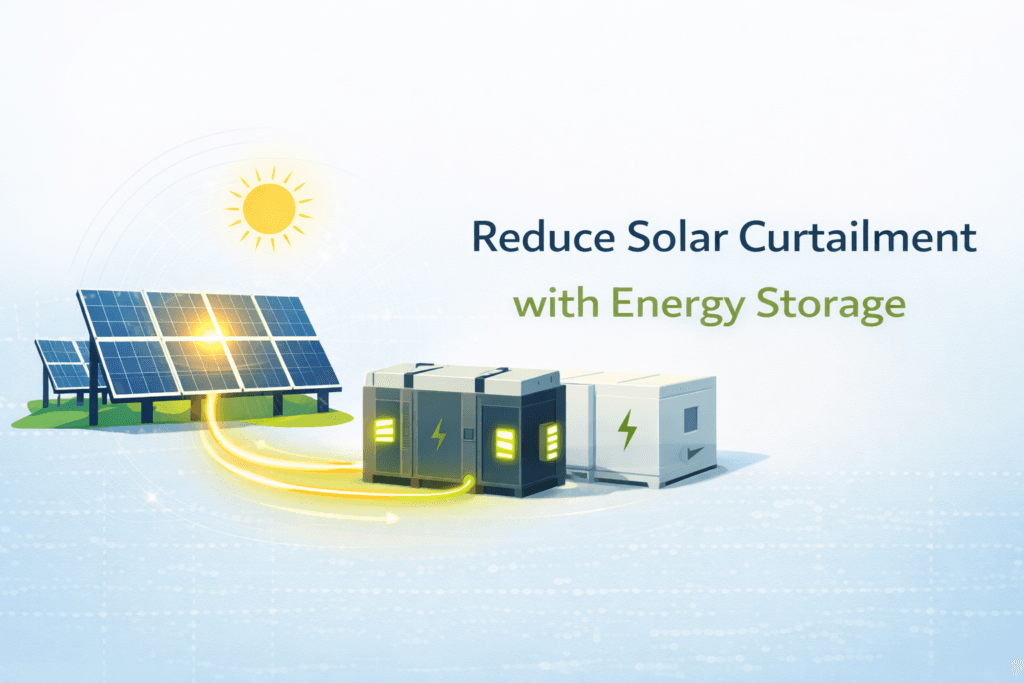
As solar adoption accelerates, curtailment is becoming a key driver for battery energy storage deployment.
In the future:
- Curtailment will trigger storage investments
- Solar-only plants will become solar-plus-storage
- Grid flexibility will define energy value
Conclusion: Turning Wasted Solar Into Opportunity
Solar power curtailment highlights a critical transition challenge—but also a massive opportunity.
With:
- Energy storage
- Smarter grids
- Better market design
We can turn excess solar into reliable, dispatchable clean energy.
The sun isn’t the problem—the system just needs to catch up.
FAQ: Solar Power Curtailment
Q: Does curtailment damage solar panels?
No. Curtailment only limits output, not hardware.
Q: Can batteries eliminate curtailment entirely?
Not always, but they can reduce it dramatically.
Q: Is curtailment increasing globally?
Yes—especially in high-solar penetration markets.