
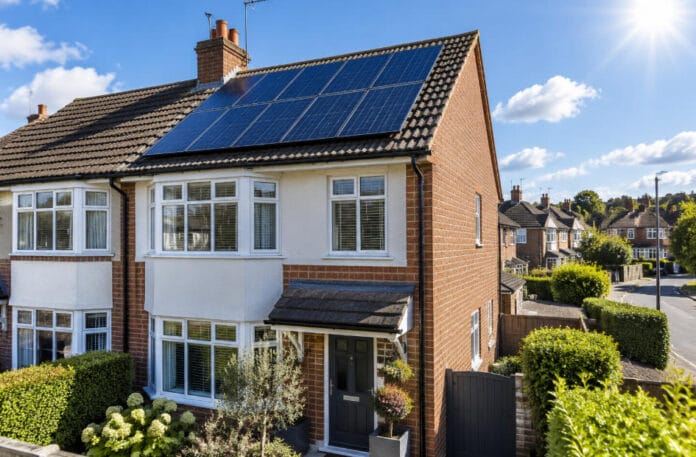
Octopus Energy solar payments to UK households have reached almost £100 million over the past year. The supplier announced the milestone this week. Record numbers of homeowners are installing rooftop panels to cut their bills and earn cash by exporting surplus power to the grid.
Octopus Energy, the UK’s largest energy supplier, says the milestone reflects a rapid rise in home solar generation. Average payments to participating households reached £244 over the period. Britain’s fifth heatwave of the year also drove a surge in interest in home solar installations.
Octopus Energy Solar Payments: Average Household Earns £244
More than 400,000 households on Octopus Energy tariffs now generate their own renewable electricity, the company says, and that number keeps climbing. Customers who produce more solar power than they use can export the surplus to the grid. They receive payment for it through an export tariff, turning spare rooftop generation into a regular source of income.
Rebecca Dibb-Simkin, Octopus Energy’s chief product and marketing officer, says home-grown renewable power cuts households’ reliance on fossil fuels. She adds that it also strengthens the security of the wider energy system.
Solar Enquiries Surge Amid UK Heatwave
Octopus Energy reported a sharp rise in interest in solar installation this summer. Almost 74,000 people contacted the company about installing solar panels in May, June and July alone. That’s a 34% increase on the same period last year.
Sustained hot weather across the UK drove the spike. The conditions also drew renewed criticism from climate campaigners. Green New Deal Rising co-director Hannah Martin was among those pressing the government to explain the link between the heatwaves and the wider climate crisis more clearly.
Eligibility: Who Can Get Octopus Energy Solar Payments
Export tariffs pay out Octopus Energy solar payments. These tariffs sit under the government’s Smart Export Guarantee (SEG) scheme, which Ofgem regulates. To qualify, a household generally needs to meet these conditions:
- Solar panels (or wind/micro-CHP) installed by an MCS-certified (Microgeneration Certification Scheme) installer
- A smart meter that can record half-hourly export data — almost all SMETS2 meters qualify, as do most SMETS1 meters
- An export MPAN (meter point number); Octopus applies for one on a customer’s behalf if they don’t already have it
- No current Feed-in Tariff (FiT) export payments for the same installation — the two schemes can’t run together
- For Octopus’s own Outgoing tariffs, the household must also be (or become) an Octopus Energy import customer; its base SEG tariff doesn’t require switching import supplier
- For battery-linked tariffs such as Octopus Flux, the household needs a compatible battery from an approved manufacturer
Minimum and Maximum Limits on Solar Export Payments
There’s no fixed minimum or maximum cap on how much a household can earn. Payment scales directly with how much surplus electricity the household exports, measured in pence per kilowatt-hour (kWh). Rates vary by tariff:
- Octopus SEG (base tariff, any import supplier): a lower flat rate, positioned as a safety-net option
- Outgoing Octopus (flat rate, Octopus import customers only): currently around 12p/kWh exported
- Outgoing Agile (half-hourly variable rate): tracks wholesale prices, averaging roughly 9.4p/kWh over the past year, with much higher peak-time rates
- Octopus Flux / Intelligent Octopus Flux (battery required): variable import/export rates; peak export windows (typically 4pm–7pm) pay substantially more than off-peak periods
Total earnings depend on system size and tariff choice, since there’s no cap. They also depend on how much electricity the household uses versus exports. Larger, well-sited solar arrays paired with a battery generally earn more.
How to Install Solar Panels and Start Earning Octopus Energy Solar Payments
Households want to receive Octopus Energy solar payments for exported electricity. Here’s what they need to do before payments begin:
- Install solar panels (and, optionally, a battery) through an MCS-certified installer — the panels don’t need to come from Octopus itself
- Confirm or upgrade to a smart meter that can take half-hourly export readings; Octopus can arrange installation if needed
- Choose an import tariff — some export tariffs, like Outgoing Octopus, require Octopus as the import supplier, while Octopus SEG works with any supplier
- Sign up for an export tariff through the Octopus Energy website or app, providing MCS certification details and meter information
- Octopus applies for an export MPAN if one isn’t already in place, then starts reading exported electricity remotely via the smart meter
- Earnings appear automatically on the customer’s online dashboard and monthly bill, offsetting or exceeding what they owe for imported electricity
How Octopus Energy’s Solar Export Scheme Works
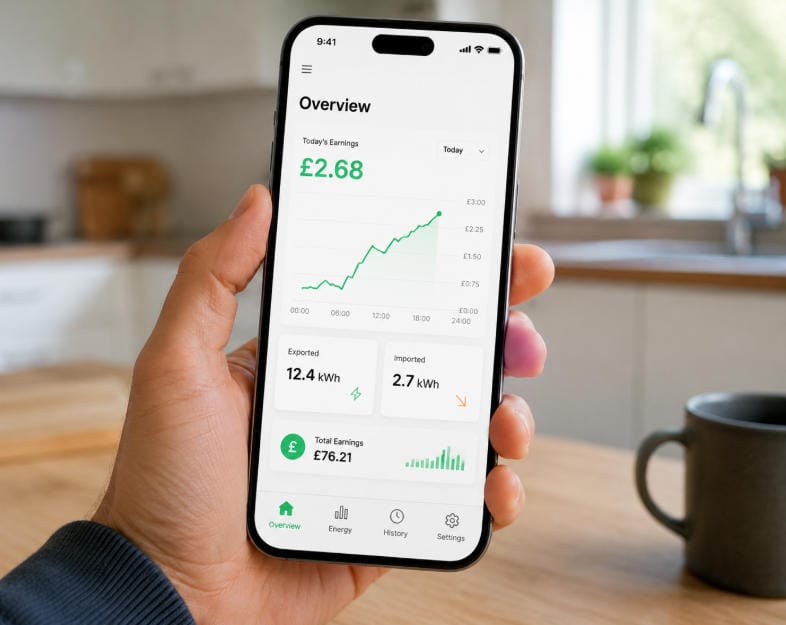
Octopus Energy pays customers for surplus solar electricity through export tariffs, including a flat-rate option and time-of-use options. Its Octoplus rewards scheme adds another layer: it pays customers in credits, gift cards and prize-draw entries for shifting energy use to times when renewable supply runs high.
- Smart Export Guarantee (SEG) tariffs pay a set rate per kWh exported to the grid
- Saving Sessions and Octoplus reward reduced consumption at peak demand times
- Solar and battery tariffs let customers sell stored power back to the grid at peak prices
- Customers sign up through the Octopus Energy app, which reads export data straight from the smart meter
Why Octopus Energy Solar Payments Matter for the UK Energy Transition
The UK is pushing to expand renewable generation and cut curtailment — the practice of switching off wind and solar farms when the grid can’t absorb their output. The National Energy System Operator (NESO) oversees demand-flexibility schemes designed to ease that pressure. Industry figures say schemes that reward households for flexible, home-grown generation help ease pressure on the grid while lowering bills. Savings still depend on panel size, location, and how much power a household exports rather than uses itself.
Frequently Asked Questions About Octopus Energy Solar Payments
How much do Octopus Energy solar payments average per household?
Payments vary by tariff and how much surplus electricity a household exports, but Octopus Energy says the average customer payout reached £244 over the past year.
Is there a minimum or maximum limit on Octopus Energy solar payments?
No fixed cap exists. Payment is calculated per kWh exported, so earnings scale with system size, export tariff chosen, and how much surplus electricity is sent to the grid.
What do I need to qualify for Octopus Energy solar payments?
An MCS-certified solar installation, a smart meter that records half-hourly export data, and an export MPAN. Some Octopus tariffs also require Octopus as the import supplier.
How do I sign up to get paid for solar power?
Households with solar panels and a smart meter can register for an export tariff through the Octopus Energy app or website; exported electricity is then paid for automatically based on smart meter readings.
What is the Octopus Energy Octoplus scheme?
Octoplus is Octopus Energy’s free rewards programme that pays customers in credits or prize draw entries for reducing or shifting electricity use during Saving Sessions and other flexibility events.
Related Reading
- Official Smart Export Guarantee rules → Ofgem Smart Export Guarantee overview
- Find an MCS-certified installer → Microgeneration Certification Scheme (MCS)
- Octopus Energy’s own tariff details → Outgoing Octopus export tariff